Role: Lead UX Designer
Team: 1 Product Owner, 1 UX Designer (Me), 1 Engineer
Timeline: 8 Months
Platform: Progressive Web App (PWA)
The Challenge: From Paper to PWA
In Tactical Combat Casualty Care (TCCC), every second counts, and every data point matters. Historically, medics and soldiers used small, physical paper cards to document injuries.
The Problem: Paper cards are easily lost, destroyed by the elements, or rendered illegible by blood or weather.
The Goal: Build a PWA with offline-first capability that allows users to digitize TCCC documentation and seamlessly sync it to healthcare professionals once connectivity is restored.
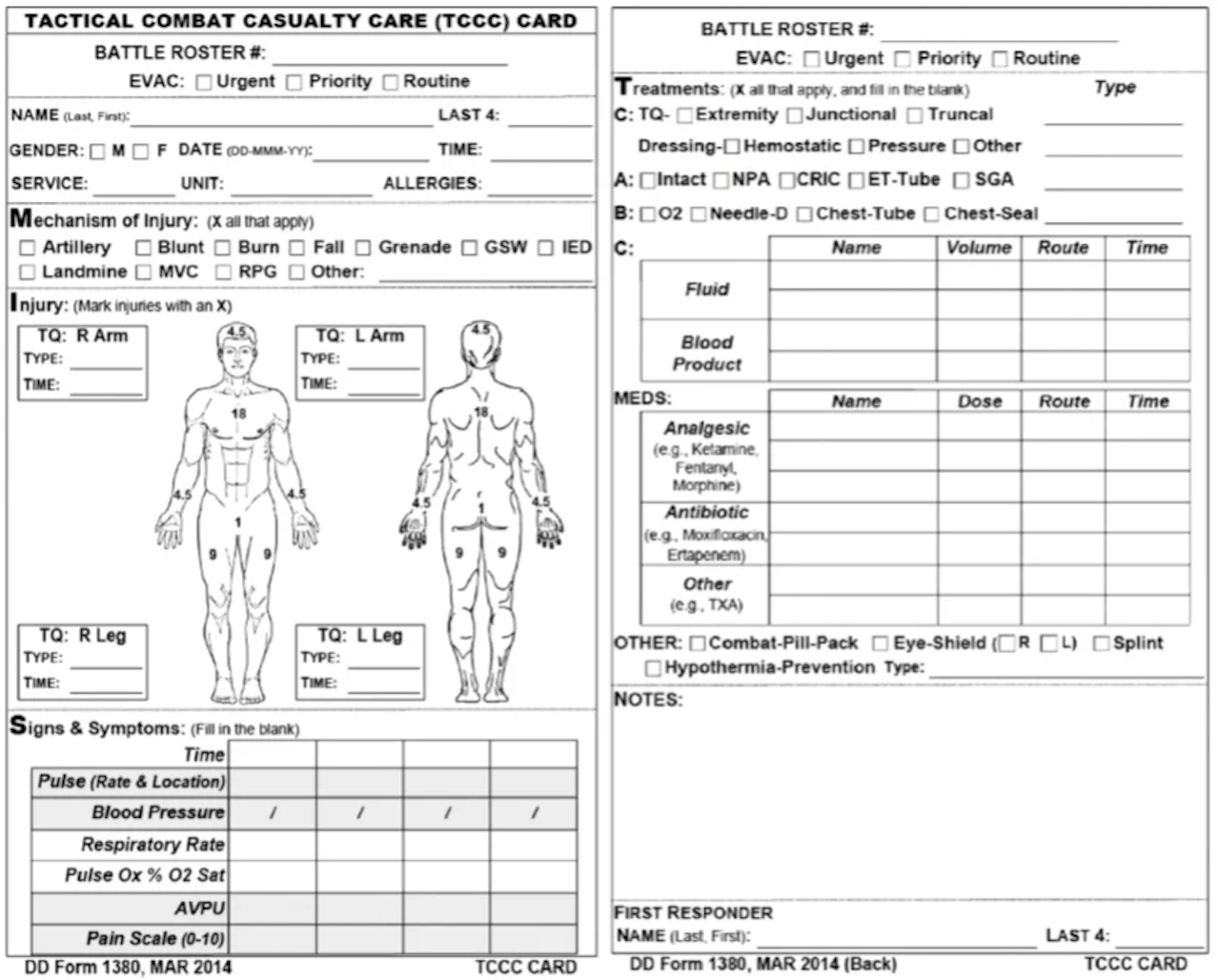
Physical TCCC card. Subject to being lost, illegible text, wear and tear.
Research & Discovery: The "Mental Load" Gap
I interviewed 20+ military members ranging from combat medics to standard infantry.
The Findings: While TCCC training is universal, the quality of documentation varies wildly based on the user's stress level and expertise.
Competitive Audit: Existing digital tools were "feature-heavy," requiring external peripherals (like finger O2 sensors). This added weight and technical complexity that users didn't want.
The Pivot: During live-exercise observations, I realized that "digital" didn't need to be "faster" than paper; it needed to be lower effort. We shifted focus from adding features to reducing cognitive load through a streamlined, guided workflow.
The Messy Middle: Designing for Chaos
Designing for a combat environment meant accounting for high-stress ergonomics.
Information Architecture: I broke the dense, one-page physical card into logical, sequential screens. This prevented "form fatigue" and ensured the most critical life-saving data was captured first.
Constraints & Security: Working with a skeleton team meant I had to be extremely precise with my handoffs. Additionally, we had to navigate HIPAA compliance and strict military security protocols for data encryption at rest.
Wireframing: I tested low-fidelity prototypes with Medical Squadrons to ensure the "tap targets" were large enough for a user who might be wearing gloves or experiencing tremors from adrenaline.
The Solution: TDOC
The final PWA provided a lite, ruggedized interface that functioned entirely offline.
Key Feature: A step-by-step guided entry system that ensured legibility and completeness without slowing the user down.
Technical Edge: Leveraging PWA technology allowed for "install-to-home-screen" ease without the overhead of an app store, crucial for field deployment.
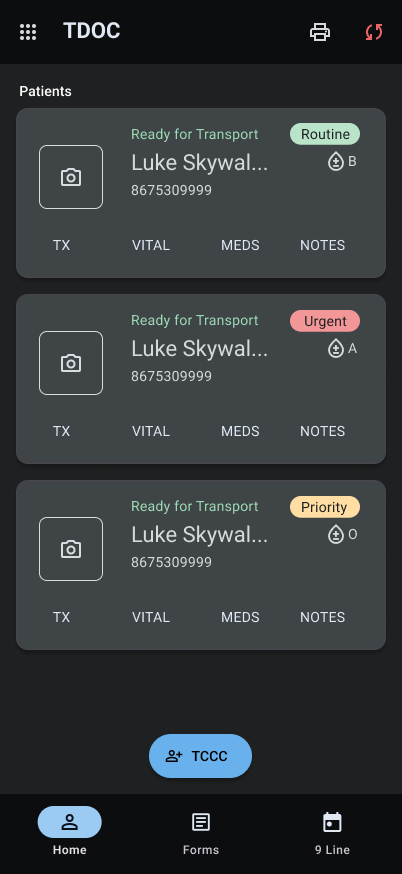
Home Screen to view documented encounters
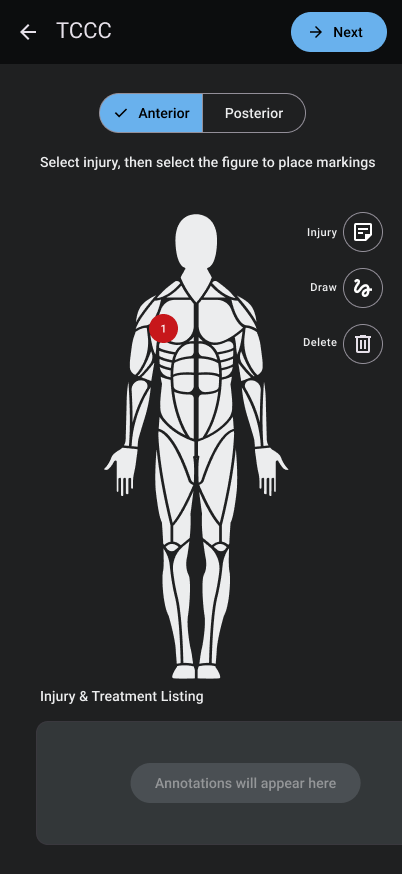
Injury and treatment feature with preloaded injuries and treatments to reduce cognitive errors in documentation
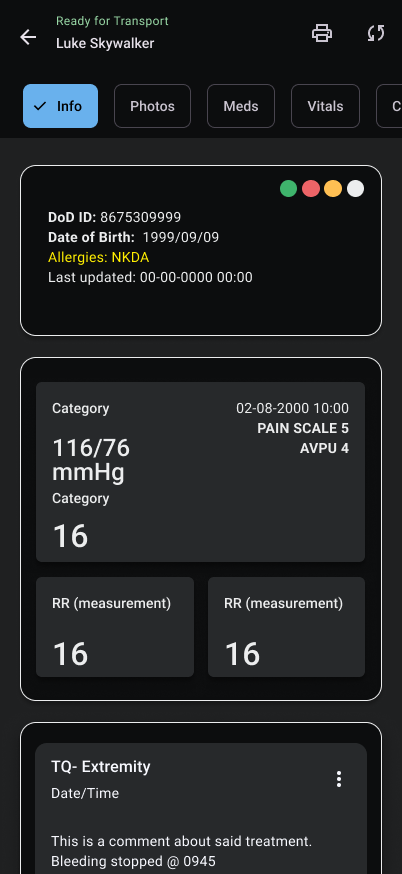
Finalized TCCC documentation overview
The Impact: Legibility Over Speed
Success in this field isn't just about shaving seconds; it's about the survival of information.
The Metric: Research shows paper TCCC cards take ~1–2 minutes to fill out. TDoc matched this speed (approx. 1:30 min), but solved the "loss of data" problem.
The Result: We replaced messy, lost, or illegible paper trails with 100% legible, digital records that could be passed to higher echelons of care.
Long-term Value: By digitizing the data, we enabled long-term injury tracking and medical auditing that was previously impossible with lost paper scraps.